The old playbook is losing its power.
What worked before may not work in the conditions taking shape around you.
When the old plan no longer feels adequate and the next move isn't obvious, the answer may not be a better forecast. It may be a better way to think about the future.
Every strategic plan contains assumptions about the future.
Scenario planning makes those assumptions visible before they become liabilities.
You're not without a strategy. You're confronting a moment when the strategy that got you here may no longer be enough.
What worked before may not work in the conditions taking shape around you.
Invest, expand, partner, pivot, or wait. Each choice closes some doors and opens others.
Your team has data and opinions, but different assumptions about what comes next.
You need a way to move before the uncertainty is resolved.
From “What is the right answer?” to “What choices can we make well, even if we don't know what happens next?”
Scenario planning is not a substitute for strategic planning. It expands the thinking that informs it. This matters when the future cannot responsibly be reduced to a single forecast.
Good strategic planning can already incorporate uncertainty. Scenario planning makes that inquiry explicit, disciplined, and shared.
A growing organization is considering a major expansion. Should it commit capital now, stage its investment, find a partner, or wait?
Two critical uncertainties shape the decision. Select a future to see what it could mean.
Demand is growing, capital is available, and competitors are moving. Expansion can create an advantage, but timing and execution matter more than enthusiasm.
Stage an expansion with clear milestones. Secure capacity before committing to the full rollout.
Sustained customer commitments, improving financing terms, and competitors expanding capacity.
Validate demand, preserve liquidity and flexibility, and define the evidence needed before larger commitments. The right strategy is not necessarily the same in every scenario—but some moves remain useful across all four.
A facilitated inquiry that brings diverse perspectives together, makes uncertainty discussable, and turns what the team learns into strategic direction.
Identify the decision, the time horizon, and what is really at stake. Surface the assumptions already embedded in the plan.
Bring in people with different vantage points. Explore driving forces, relationships, emerging signals, and the uncertainties that matter.
Build several internally coherent worlds. Explore how the organization, its customers, and its environment would behave in each.
Test the existing strategy and new options against each world. Look for common vulnerabilities, robust moves, and contingent bets.
Choose what to do now, what to preserve as an option, what to watch, and when to revisit the plan.
The approach draws on the research-based scenario planning methodology of Thomas J. Chermack at Colorado State University, as described in Mick Consulting's scenario-planning practice.
The aim is a stronger strategic conversation and practical artifacts your team can use. The precise outputs fit the decision and the engagement.
A focal question, the assumptions in play, a map of forces and uncertainties, and memorable scenario narratives.
A stress test of current and alternative strategies, no-regret moves, and options to develop or preserve.
A set of signals to monitor, trigger points for revisiting decisions, and an action agenda with responsibilities.
Representative, anonymized examples of Ryan's scenario-planning work, originally described by Mick Consulting.
A nonprofit needed a direction for growth without pretending the future was predictable. Scenario work established a foundation for its five-year growth strategy.
A company faced consequential choices about its future. The scenario process surfaced considerations that later informed its path toward a merger.
Engagements can range from focused executive thought partnership to a deeper scenario-planning process. We shape the work around the situation rather than forcing it into a package.
An introductory conversation to clarify the decision, the uncertainty around it, and whether a scenario approach could help.
Request a conversationA facilitated exploration of one consequential question, with a focused set of scenarios and strategic implications.
A broader process that convenes stakeholders, develops plausible futures, and translates insight into strategy and implementation.
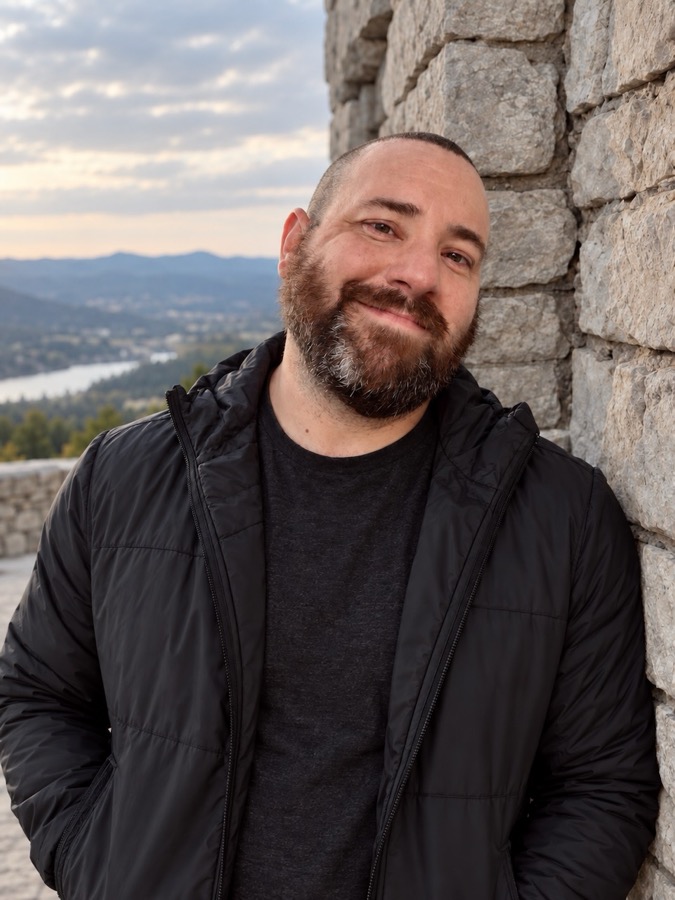
I'm Ryan Mick. My work across business, education, nonprofits, and consulting has taught me that difficult decisions rarely yield to a standard answer. They require attention to context, curiosity about hidden assumptions, and the willingness to explore ideas that may initially seem uncomfortable.
I lead The Mosaic Companies and founded Mick Consulting. My doctoral work at Colorado State University focuses on organizational learning, questioning, and how we navigate complexity and uncertainty.
More about my background and researchScenariKnow is the specialized starting point for scenario planning. The right delivery relationship depends on what the work requires.
Background, leadership, research, and professional perspective.
ryanmick.comExecutive thought partnership, organizational strategy, and scenario-planning engagements.
mickconsulting.comBroader consulting, coordination, project management, and operational support when the work calls for implementation capability.
themosaiccompanies.comWe don't have to agree on what the future will be to make a more thoughtful decision today.
Start a conversation with Ryanryan@mickconsulting.com